Kun Khmer in Siem Reap: Where to Train, What to Expect
Cambodia's traditional striking art has a small but real training scene in Siem Reap. Drop-in classes from $12.
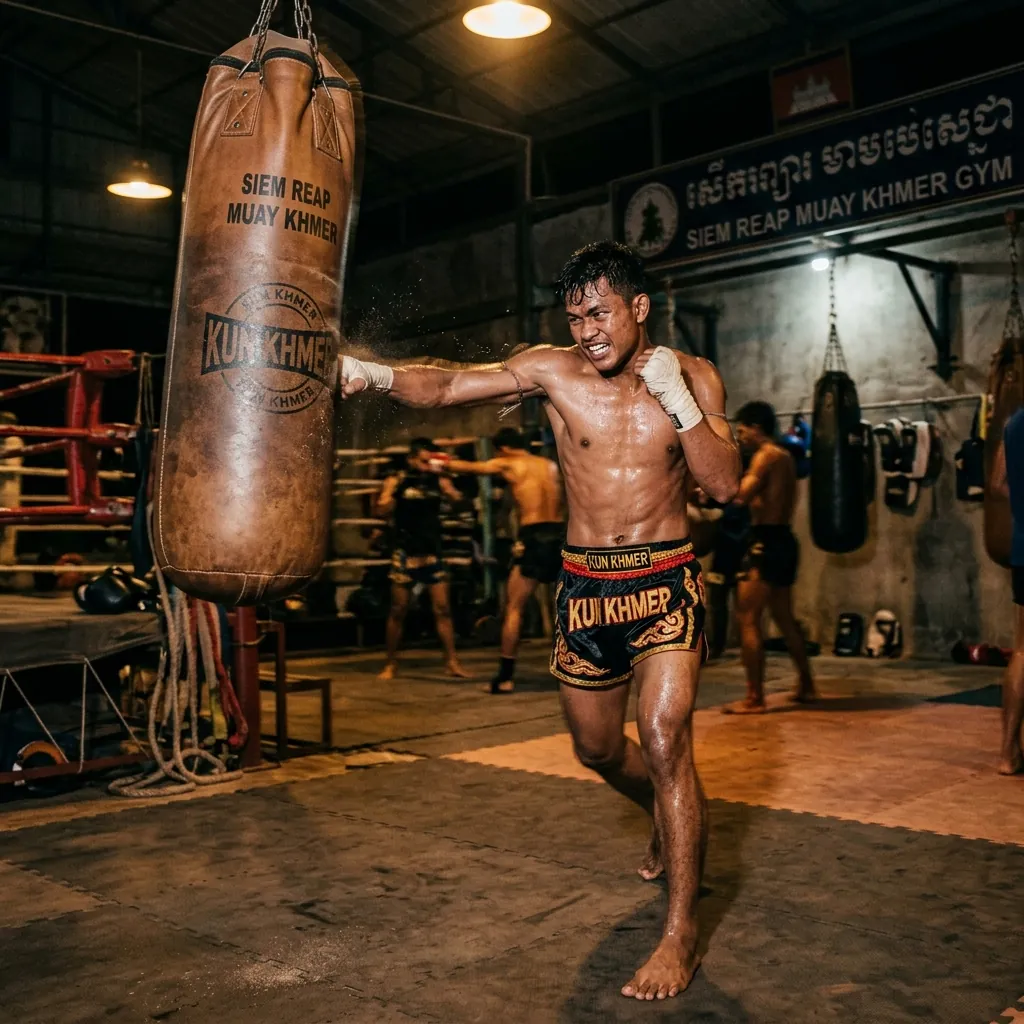
Cambodia has its own martial art. It looks like Muay Thai if you have seen Muay Thai, and the two share a common ancestry, but the Cambodian version is called Kun Khmer (or Pradal Serey) and locals will quickly correct you if you confuse them.
Siem Reap has a small but real martial arts scene aimed at both serious training and curious visitors. A drop-in tourist class costs $10 to $20. A multi-day fight camp with accommodation costs $200 to $800 depending on length and luxury level. This guide covers what to expect and where to go.
What is Kun Khmer
Kun Khmer is Cambodia's traditional stand-up striking art. Fighters use punches, elbows, knees, and kicks, plus clinch work. There is no ground game. The style is closely related to Muay Thai, Muay Lao, and Lethwei (Burmese boxing); historians argue about which came first, and both Cambodians and Thais claim primacy. For visitors, the practical point is simple: if you have trained Muay Thai, your skills transfer directly. If you have not, you are starting from zero in good company.
Live Kun Khmer matches happen most weekends on Cambodian television (CTN, Bayon TV, Hang Meas). For travelers staying long enough, Phnom Penh's Kambol Boxing Stadium runs regular live cards. Siem Reap has fewer scheduled fights but the city has a growing recreational training scene.
Training in Siem Reap: the four main options
Ground Zero: Martial Arts & Yoga Cafe
163 Sombai Road. Open Mon to Fri 8am to 8pm, Sat and Sun 8am to 4pm.
Ground Zero combines a martial arts studio with a yoga space and a cafe in one building. The teaching covers Kun Khmer, Brazilian Jiu-Jitsu, MMA, plus yoga and meditation. Drop-ins are welcomed and the staff are used to first-time visitors. A single class is around $12 to $15; weekly passes cost $40 to $60.
Best for: visitors who want a single drop-in class without committing to a fight camp, or anyone interested in combining BJJ with Kun Khmer. The cafe in the same building means you can get coffee or a smoothie immediately after training.
Meru Gym
Preah Norodom Sihamoni Avenue, Svay Dangkum.
A larger full-service gym with weights, cardio, group fitness classes, and martial arts on the schedule. Kun Khmer, BJJ, MMA, plus spinning and general gym programs. Suits visitors who want regular cross-training and not just martial arts. Walk-ins are accepted.
Mr Ly Kun Khmer Gym
City center, within walking distance of Pub Street.
Mr Ly's gym is purpose-built for training tourists. The package model includes accommodation on-site (dorm, private budget, or private deluxe rooms) bundled with daily classes. Fight camps run from a few days to a month. Twice-daily training sessions of two hours each. Best for visitors who want the full immersive experience and prefer to live where they train. Prices vary by length and room class; a 9-day camp with dorm-style stay starts around $300.
Kingdom Fight Gym (KFG)
KFG was founded in Siem Reap in 2018 and has since expanded to Phnom Penh and Koh Rong Sanloem. The original Siem Reap location has had quieter periods in recent years; verify current status before traveling. Their fight-camp model is similar to Mr Ly's: two daily classes, sometimes with accommodation packages. The Phnom Penh location is the more active center at the time of writing.
What to bring
Most gyms rent gloves and shin guards for a few dollars per class. If you plan to train more than two or three sessions, bring your own.
- 14oz or 16oz boxing gloves (for striking)
- Shin guards (essential for Kun Khmer; you will be kicking pads and partners)
- Hand wraps
- Athletic clothing that wicks sweat
- Sandals or flip-flops for between classes
- A reusable water bottle (the heat is real)
Mouth guards and groin protection are personal items; bring your own.
A realistic first class
If you have never trained a striking art, expect the following from a one-hour Kun Khmer beginner class at any of the gyms above:
- 15 minutes warm-up. Skipping rope, shadow boxing, mobility work. Most gyms keep the warm-up gentle for new arrivals.
- 20 minutes technique. A coach demonstrates one strike (a jab, a teep kick, a roundhouse). You drill it on a pad or with a partner.
- 15 minutes pad work. A partner holds pads while you strike. Combinations of two or three strikes.
- 10 minutes conditioning. Push-ups, sit-ups, knees on the heavy bag.
You will be sore the next day. Drink electrolytes. Eat well. Take rest days.
Beyond Siem Reap
Cambodia's biggest fight gyms are in Phnom Penh. If you have flexibility in your itinerary and you want to train more seriously, a week in Phnom Penh adds gyms like Kingdom Fight Gym Phnom Penh and KIRI Jiu Jitsu (which specializes in BJJ at a competitive level). The capital also has the Kambol Boxing Stadium for watching live fights.
For wellness-oriented retreats that combine martial arts with yoga and meditation, places like Angkor Grace (a resort outside Siem Reap) run multi-day packages. These are pricier ($800 to $2,500 for a 3 to 7 day stay) but include accommodation, meals, and a wider program.
Etiquette
A few things that apply at any gym in Cambodia:
- Bow when you enter and leave the training area. This is a small acknowledgment of respect for the practice. It is not religious; you do not need to know how to do it correctly. A nod and a clasped-hands gesture will do.
- Greet your coach with their title. "Kru" (or "Kru-kun") is the Khmer word for instructor. "Kru, hello" goes a long way.
- Do not point your feet at someone's face. A general Khmer cultural rule, especially relevant when you are stretching or sitting near the mats.
- Tip your coach at the end of a multi-day camp. $10 to $30 depending on the length of the camp and the depth of the relationship. Cash, in U.S. dollars or riel, with a sincere thank you.
The martial arts scene in Cambodia is small enough that gyms know each other and welcome travelers. A few classes here will deepen your visit in ways that the temples cannot. The art is older than Angkor in some retellings. Walking into a gym and learning a single combination is one of the most direct ways to touch living Khmer culture.